Diamond Marketing Class: Safe Home Outline
Your contact’s blueprint for a healthier home!

Navigating the world of home products will no longer be overwhelming after this class, even when labels can be misleading.
For those seeking the healthiest options for their homes and wanting a home that promotes wellness, this class is for them!
We unravel the FDA labeling laws and discover the truth behind product claims.
We explore the top five ingredients to avoid on labels and empower contacts to make informed choices for a safer home.
Show contacts how to prioritize their family's health without stretching their budget and help them kick-start their wellness and safe home goals!
The Outline: The Safe Home
Welcome to The Safe Home class! You want the healthiest options in your home. You know the long-term side effects of cheaply made brands will affect your family's health by making them more susceptible to illness. You want to be able to trust that what you are paying for and using in your home not only will protect your family from harm but also contribute to their wellness.
You may not know where to start, but this is where I come in! I will show you the top five ingredients to avoid on your product labels and share why I chose the brand I did for my home.
In today's world, any marketer can make an empty promise, but it’s not what they say on their label that matters; it's the transparency of their commitment to safety that matters. The FDA labeling laws allow brands to say their products are “organic” or “pure” and make any claim on their label as long as that claim is valid for just ONE ingredient!
Let me show you how to choose products easily and confidently, knowing that you create a safer home with every product you bring in.
Phthalates are a group of industrial chemicals that add flexibility and resilience to many consumer products. Phthalate plasticizers are commonly used to make hard plastic PVC more flexible but don’t bind to PVC. So they can leach, migrate, or evaporate into indoor air and atmosphere.
Phthalates are solvents often used in cosmetics because they help fragrances last longer and help lotions penetrate the skin. Up to 75% of the time, when there is a “fragrance” in an ingredient, there are legally hidden phthalates.Although some phthalates are being phased out of cosmetics under consumer pressure, diethyl phthalate (DEP) is still used in many products, including fragrance, and was found in 12 of 17 fragrance products tested. In addition to “fragrance” in cosmetics, it's in polyvinyl chloride (PVC)-based plastics and other flexible plastics.
Recent epidemiological studies have associated DEP with a range of health problems, including sperm damage in men since it's been found to cause hormone disruption, which can affect development and fertility.
Phthalates are found in tablecloths, furniture, vinyl flooring, shower curtains, wallpapers, garden hoses, inflatable swimming pools, plastic clothing such as raincoats, children’s toys, automobile upholstery and tops, medical tubing, and blood storage bags.DEP and DBP are used as fixatives, detergents, lubricating oils, and solvents in non-plastic consumer items such as carpets, paints, glue, insect repellents, time-release capsules, soap, shampoo, hair spray, nail polish, deodorants, and perfumes.
Most products will advertise PVC-free on the packaging; a quick search on their website will help you get the full list of ingredients to look for DEP. Be careful of toys and household products without labels you buy at garage sales and thrift stores.
How can you avoid Phthalates? You can choose products with no added “fragrance.” Read ingredient labels because even products advertised as “fragrance-free” may contain a masking fragrance.
Next, switch to natural fragrance - or the scents of real plants! One of my all-time favorite essential oil guidebooks is French Aromatherapy: Essential Oil Recipes and Usage Guide, which you can find here: https://amzn.to/2QKCyGJ
In this book, you can learn to DIY natural-based products, adding real oils as the scent!
Fragrance is the new secondhand smoke (due to yesterday's chemical, phthalates, remember they were found in fragrance)! But let's dive into this ingredient.
This is a catch-all ingredient for all kinds of other ingredients & chemicals that can be hidden within the word “fragrance” or “parfum” on the bottle!
When companies use the word "fragrance," the specific ingredients don't need to be disclosed because the individually made scents are protected as "trade secrets" for brands! They also DO NOT need to be tested for safety. It’s an ingredient that is the opposite of transparent.
If you think you are safe with “green,” “organic,” or “natural” store-bought cleaners, BRACE YOURSELF. That's a common misconception. Labeling laws are SO under par in the US, and companies can easily get away with saying something is “natural” or “pure” as long as they reference just one ingredient.
These seemingly safe brands all contain the ingredient “fragrance”: Melaleuca, Mrs. Meyer's, Babyganics, Nubian, Heritage, Jason, Alba Botanica.
How to choose real-quality natural fragrance? Sadly, most essential oils are fragrance, too! This is because oils are “regulated” by the fragrance industry, and fragrance quality, even lab-made, is acceptable. But if you want a genuinely healthy swap, take 5 minutes to look for these things when choosing an oil company to help you replace synthetic fragrance:
The plants for the oils are grown according to at least organic standards.No chemical solvents are used when distilling the oil.
No fillers are added to the bottling process.
These will ensure a safe oil!
Take the time to go to the company's website and read through their process. If they aren't transparent about their process, they don’t care. All good quality oil companies will share their process and quality standards because it costs them more money to invest beyond the “fragrance” standards.
This is the brand I chose: https://www.youtube.com/watch?v=Up91DMPo1rE&t=9s
Choosing an essential oil should be similar to selecting your produce. It should be grown in healthy soil and properly extracted to ensure the highest quality.
Parabens, added to discourage the growth of microbes, are most common in personal care products that contain significant amounts of water, such as shampoos, conditioners, lotions, facial and shower cleansers, and scrubs. Parabens are absorbed through our skin, the gastrointestinal tract, and the bloodstream.
According to Campaign for Safe Cosmetics, “Parabens mimic estrogen by binding to estrogen receptors on cells. They also increase the expression of genes usually regulated by estradiol (a natural form of estrogen); these genes cause human breast cancer cells to grow and multiply in cellular studies.”
How can you avoid them? Look for products labeled “paraben-free” and read ingredient lists on labels.
Many natural and organic brands have found effective alternatives to parabens in personal care products. Some companies have created preservative-free products with a shorter shelf life than conventional products (six months to a year), but if used daily, they are likely to be used up before they expire. Visit a company's website to see if they avoid using parabens in their products!
Have you heard of Bisphenol-A (BPA) and BPS? Perhaps you've seen BPA-free on some products you've purchased. BPA has been the most talked about chemical to avoid. Why should you avoid them (at all costs)?
According to Environmental Health Perspective, “Rodent studies have associated prenatal and neonatal exposure to BPA with early onset of sexual maturation, reproductive tract lesions, and altered mammary gland development, among other reproductive abnormalities.”
In the same study, a “comparison of urine samples collected throughout the study showed that after using polycarbonate bottles for one week, participants’ mean urinary BPA concentrations increased by more than two-thirds.”
The authors anticipate higher urinary BPA concentrations would result “from drinking hot beverages stored in the same bottles.” This is just one of many studies done on BPA.
Now you understand the promotion of “BPA-free” plastic. However, the substitute, Bisphenol-S (BPS), or any plastic for that matter, has also been shown to be highly harmful.
How can you avoid these two chemicals? Avoid using plastic. Period. Use glass containers and stainless steel to store food, especially if it’s for the long term or for storing hot liquids. If avoiding plastic feels impossible, right now, start small and focus on these tips:
Don’t buy #7 hard polycarbonate reusable water bottles, even if it says “BPA-Free."
Never microwave, freeze, or wash the plastic in the dishwasher. Temperature changes have been shown to emit chemicals from the plastics.
What about Silicone? If you check out manufacturer claims, health blogs, and related websites, most give glowing reviews of silicone: “Silicone rubber is inert. It does not emit fumes of any sort, leach into food, or pose any health risks according to the FDA.”
Digging into the research reveals a very different picture. It seems wise, based on current research on silicone molds, to avoid them in cooking applications. Those popular silicone muffin cups and pans should never be utilized in a hot oven.Metal, wood, and bamboo utensils are preferable to silicone ones for stirring hot dishes and soups. Silicone spatulas or similar utensils for scraping out bowls and other containers are fine once the food has cooled.
Also, once post-cured in the oven (if suggested by the manufacturer) and thoroughly hand-washed, it is acceptable to use silicone-based molds for making ice cubes, jellies, popsicles, and other similar items in the refrigerator or freezer.Remember to hand-wash in warm water and mild soap after use. This avoids the leaching risks from the dishwasher's harsh detergents and hot water.
In summary, silicone molds for nonfood purposes are safe. You should always avoid using them in heated food applications. According to current research, silicone molds pose no risk for use in room-temperature, refrigerated, or freezing applications.
Knowing the chemicals to avoid is one thing, but reading all your labels and qualifying brands can be tiring! You want to be able to trust that what you are paying for and using in your home will protect your family from harm and contribute to their wellness.
I chose Young Living for my family for alternative options and peace of mind. Here are a few things that stood out to me when I looked into their company's quality control: All of their products list every single ingredient, no matter how small--they are committed to transparency! Their products are scented with oils and go through a vigorous process to guarantee no chemical ever touches any part of the growing, harvesting, or distilling process.
The term “fragrance" is NOT used to hide chemicals.Ingredients NEVER used at YL:
www.youngliving.com/blog/ingredients-youll-never-find-in-yl-products/
Having a company you can trust that is committed to quality control will make it easy to qualify safe ingredients or products once so that you feel confident that what you bring into your home is the best option!Quality control standards:
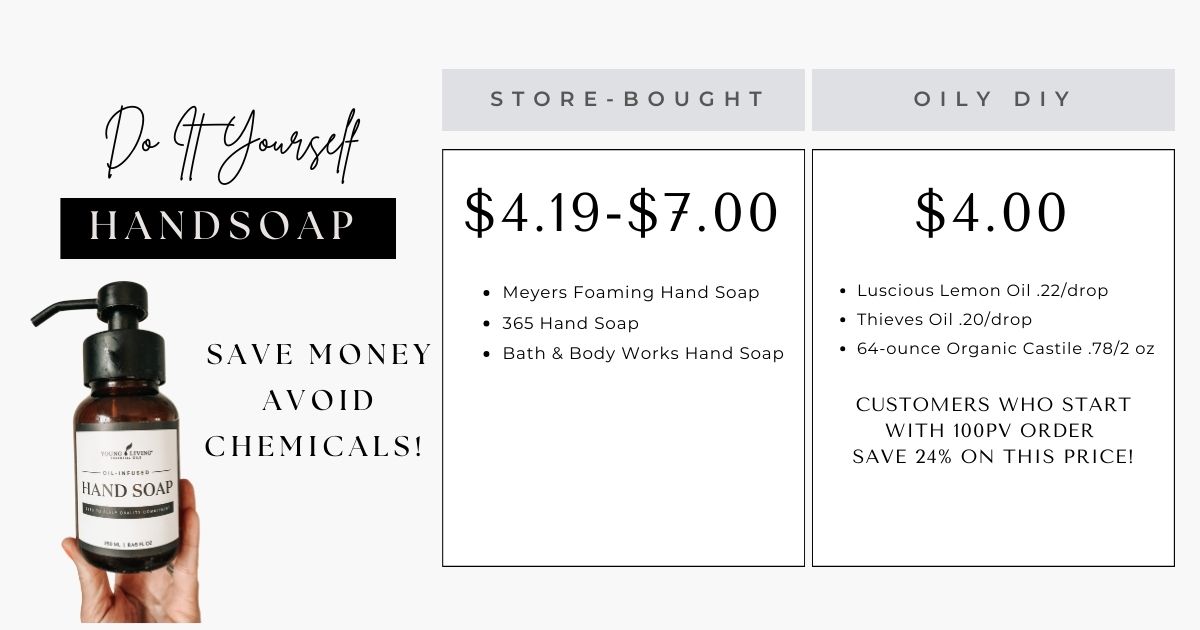
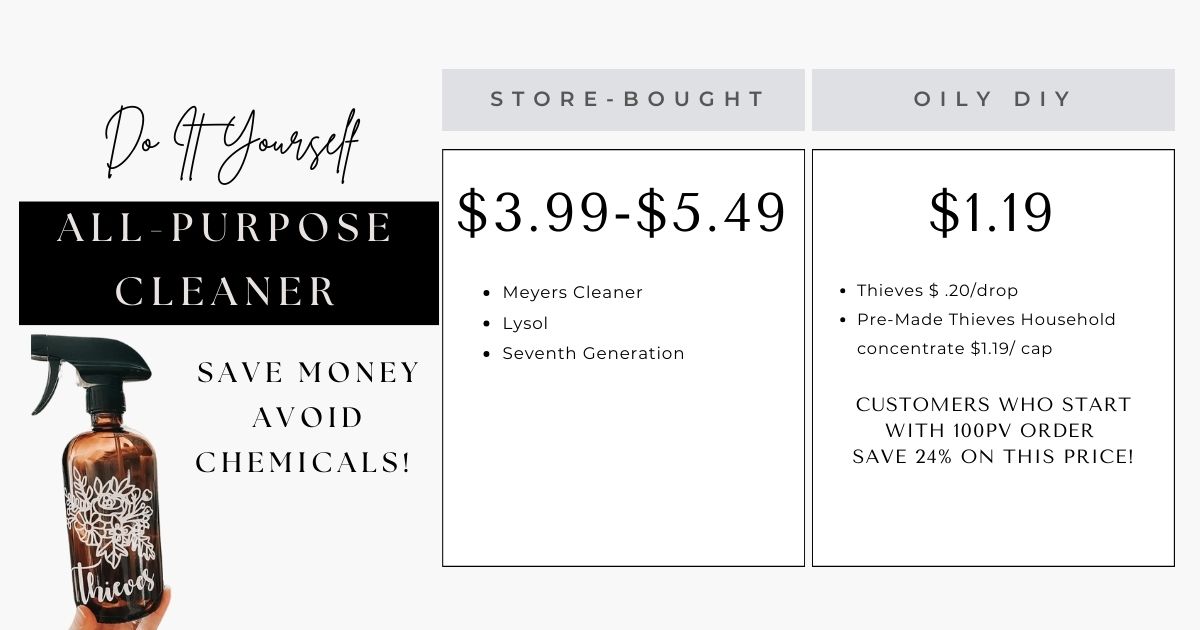
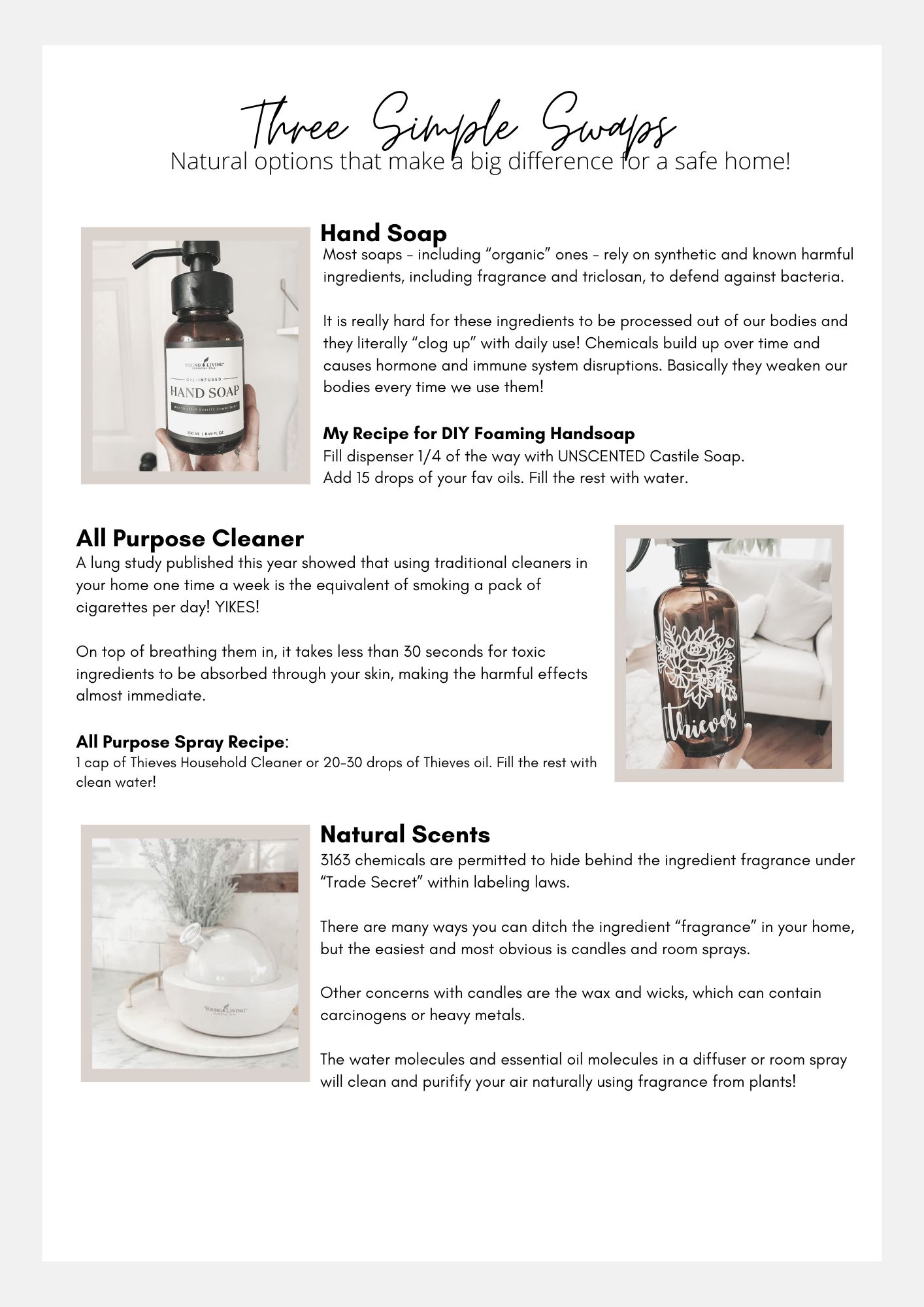
Let's save money! DIY-ing the most used products in your home ensures you avoid preservatives, synthetic fragrances, and added fillers. It is also the least expensive way to provide high quality and avoid cheap and harmful ingredients.
Here are two simple DIY projects you can make that will make a BIG impact on creating a safe and healthy home!
Here are two tutorials on making these DIYs and replacing your store-bought products:Hand Soap:
https://www.naturalandglamorous.com/diy-natural-hand-soap/Cleaner:
https://www.naturalandglamorous.com/making-room-and-cleaning-sprays/
Thank you so much for taking the time to read through this information. It will be a time investment that pays off for your family's health! Now that you know that you can use safer options for a comparable cost (and EVEN SAVE!), it's time to get started making healthier options a priority.
By my standards, the quality control at YL is top-notch, and it is in place to keep your family healthy and away from hidden or harmful ingredients. I have many options for you to shop!
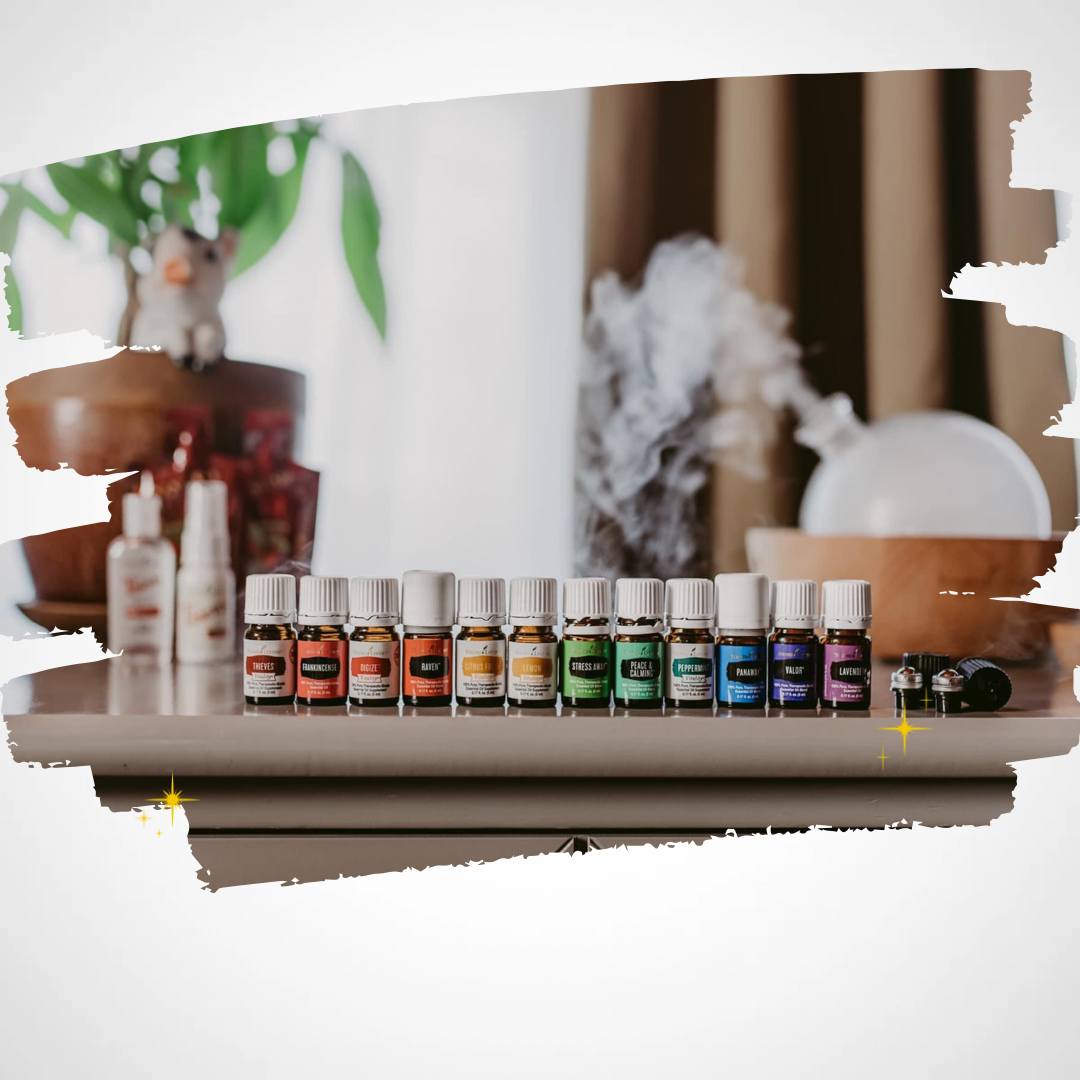
You can select any oil from the wishlist to make a DIY and enjoy a comparable OR even beat the cost of your store-bought products. You can also choose any single product you'd like to try.
To unlock a more significant discount and save 24% OFF, create an order of $100 (100PV). Select which items you want to add to your cart, and you will see the discount unlocked at checkout. Use code SHAREYL for an additional 10% OFF using my link this month.

If you haven't joined yet, text my business number 2677627076 TIPS or reply to this email with the words MONTHLY INSPIRATION now to stay in touch with my best oily information and receive a short weekly text tip or a monthly list of email tips!
This could be a diffuser blend, recipe or hack to save money and use and love your oils.
Thanks for taking the class! Do you have any questions for me?

Diamond Marketing is a customer care platform design for Young Living Brand Partners. All content provided by Diamond Marketing is the property of Diamond Marketing App LLC and cannot be copied or redistributed outside of Diamond Marketing. without prior consent.